
Rivian trims staff again as R2 and AV pressure mounts
Rivian has laid off less than 2% of its workforce, roughly 300 employees, largely concentrated in service, sales and marketing teams, just one week after beginning deliveries of its R2 SUV. The timing is hard to ignore: the R2 launch could either make or break Rivian, and cutting customer-facing staff at the precise moment it reaches consumers is a potentially alarming signal; the automaker framed it as routine restructuring while its shares fell 5.2% on the day.
The R2 is the most consequential product launch in Rivian’s history; should it outright fail, it is likely the company will too. Priced from US$48,490 for the standard trim to US$57,990 for the Performance Launch Edition, it is the lower-cost, higher-volume model the company needs to transition from a niche premium electric vehicle maker burning cash into something resembling a sustainable business. Since its founding, Rivian has accumulated more than US$27bn in losses and never posted an annual profit; it lost approximately US$6,000 per vehicle delivered in the first quarter of 2026.
The profitability timeline has already slipped once. In March 2026, Rivian disclosed it no longer expected to reach adjusted EBITDA positivity in 2027—a target to which it had previously committed—citing accelerating investment in autonomous driving development. The pivot was made alongside Uber’s commitment to invest up to US$1.25bn in the company and purchase up to 50,000 R2 SUVs as the basis for a robotaxi fleet. Rivian currently offers a hands-off, eyes-on SAE Level 2 system; this is a substantial distance from the Level 4 capability a commercial robotaxi deployment would require.
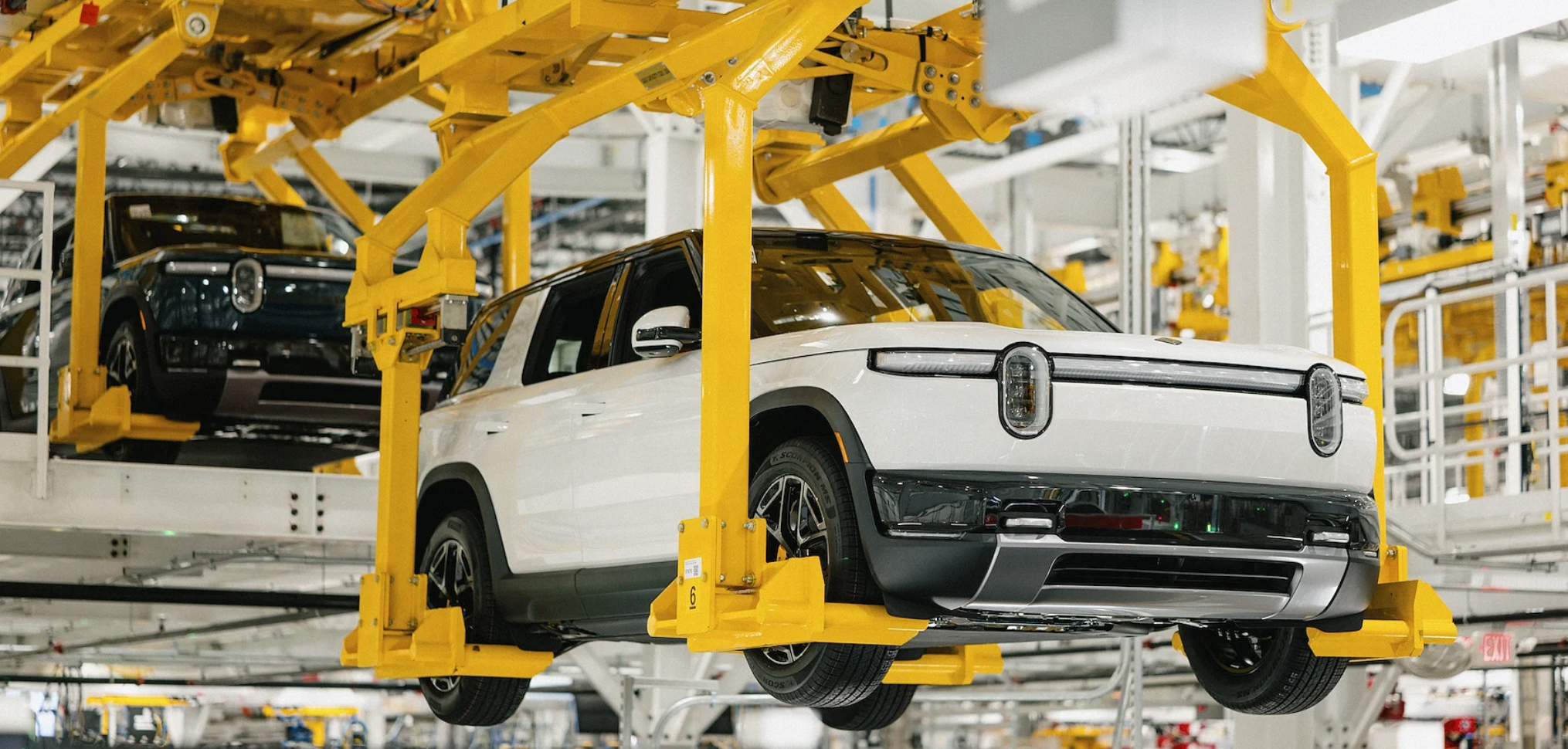
Rivian began producing the R2 at its Illinois plant in April 2026
The amount of pressure Rivian faces is difficult to avoid. The automaker is simultaneously trying to ramp its make-or-break R2 SUV, fund an autonomous driving programme it has not yet demonstrated its vehicles can handle, and cut costs in the customer-facing functions most critical to the R2’s reception. Chief Executive RJ Scaringe has identified service as the company’s most significant vulnerability—wait times reached 50 days in some regions during the R1 era—and the R2 is expected to put far greater volume pressure on a service network that is only beginning to scale.
The broader environment adds weight to the challenge. The US$7,500 federal EV tax credit was eliminated under the Trump administration, directly contributing to the softer demand that prompted Rivian’s October 2025 round of 600 job cuts. The latest reductions are the fourth round since the start of 2024. Cutting customer service jobs specifically at a time when its vehicle owners are widely reporting a lack of communication from the company, especially around service wait times, could easily backfire.
Rivian is ultimately navigating a market that has grown less forgiving at the exact moment it attempts its most ambitious product launch to date. The R2 ramp over the next two quarters, and the associated economics of scale, is the only real test of whether its financial gambit will hold up to scrutiny. Volume and margin on the R2 will determine whether Rivian’s autonomous ambitions are a credible long-term strategy, or a narrative deployed to justify an extended period of losses that investors increasingly find untenable.
AP by OMG
Asian-Promotions.com |
Buy More, Pay Less | Anywhere in Asia
Shop Smarter on AP Today | FREE Product Samples, Latest
Discounts, Deals, Coupon Codes & Promotions | Direct Brand Updates every
second | Every Shopper’s Dream!
Asian-Promotions.com or AP lets you buy more and pay less
anywhere in Asia. Shop Smarter on AP Today. Sign-up for FREE Product Samples,
Latest Discounts, Deals, Coupon Codes & Promotions. With Direct Brand
Updates every second, AP is Every Shopper’s Dream come true! Stretch your
dollar now with AP. Start saving today!
Originally posted on: https://www.automotiveworld.com/topics/software-defined-vehicle/rivian-trims-staff-again-as-r2-and-av-pressure-mounts/