Suzuki to bring electric kei to Europe by 2027, claims Nikkei
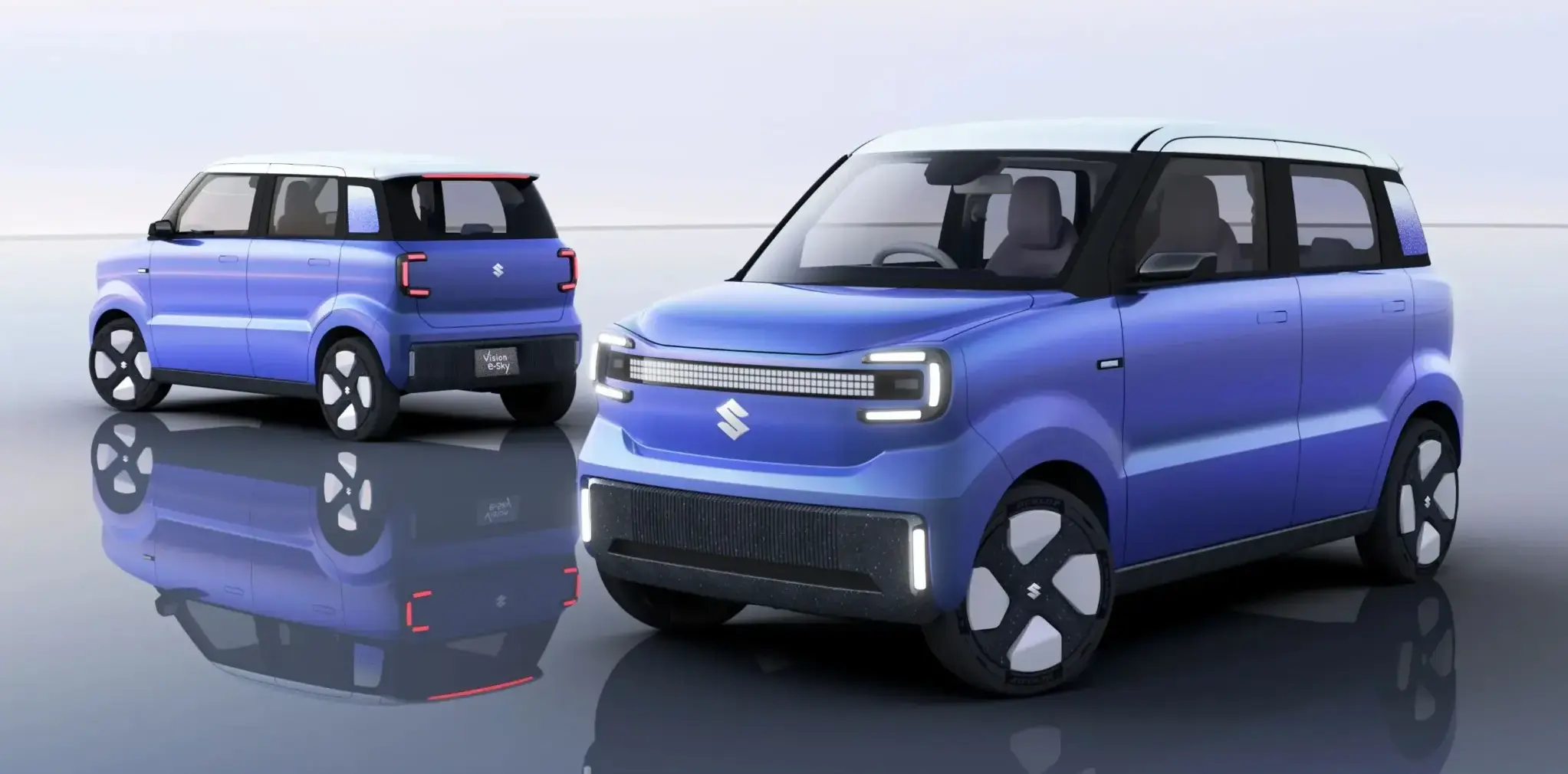
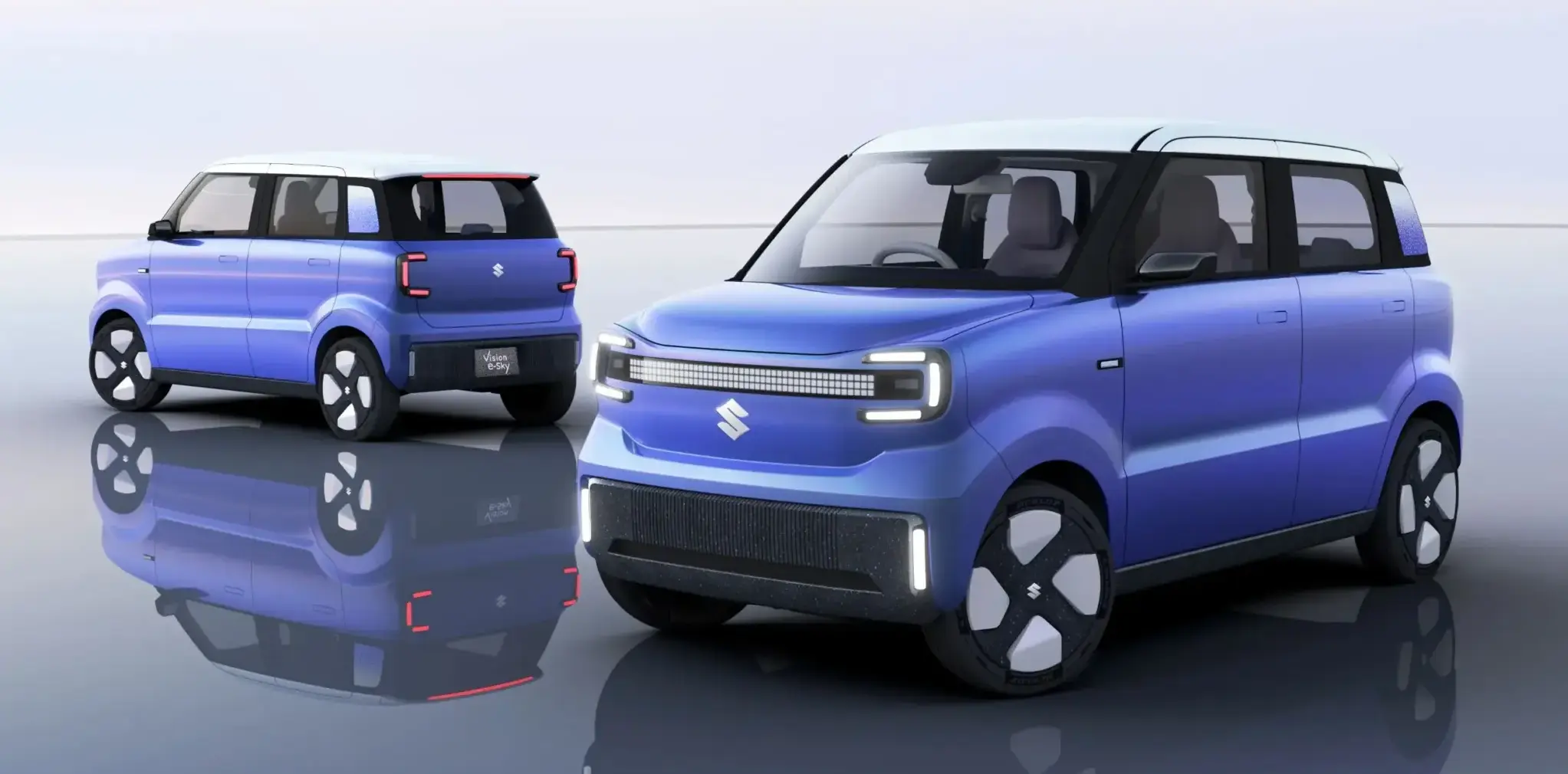
Suzuki plans to export an electric kei minicar to Europe as early as 2027, Nikkei reported on 4 August, taking direct aim at both European and Chinese competitor rivals in what is expected to be a growing segment within the bloc. The model, which it will also launch domestically this November as the Vision e-Sky, is Suzuki’s first electric kei car and the first near-unchanged offering in this segment it has exported since the Cappuccino wound down in 1995.
The export version will be built at Suzuki’s Shizuoka plant, with the UK and Italy among the markets under consideration. The former was notably the primary European market for the Cappuccino, although the latter was not. UK pricing is expected to land at less than £20,000 (US$26,850), making it one of the cheaper electric vehicles (EVs) in the European market alongside Renault’s Twingo (€19,490/US$22,430) and Dacia’s Spring (€16,900). Some specifications will need to be adapted for European road conditions and regulation; notably, the car’s batteries will be sourced from a company affiliated with BYD.
The regulatory backdrop is shaping Suzuki’s timing directly: in 2025, the EU decided to create a new small EV classification, modelled loosely on Japan’s kei system, offering subsidies and regulatory relief for compact EVs built within the bloc. There are some key differences: for example, the category’s maximum length of 4.2 metres is larger than a true kei car, but since Suzuki’s e-Sky won’t be manufactured in the EU, it’s unlikely to qualify for those specific incentives despite fitting the spirit of the policy.
There is some urgency behind the development should it bear out. Suzuki’s European sales fell by 15% year-on-year to 187,000 units in Q1, and it’s betting a low-cost mass market EV can revive that business while positioning it for expansion into other small-car markets like Southeast Asia. The pitch is also explicitly technical, aiming to show that kei-style EVs, built around small—roughly 20 kWh—batteries rather than the larger packs long-range EVs require, can be both lighter and cheaper without sacrificing daily usability. This is an argument that Nissan’s Sakura, Japan’s best-selling electric kei, has already proved domestically.
The broader market this plugs into is moving fast: EU battery-electric passenger car sales surged by 35% YoY in the first half of 2026, according to the European Automobile Manufacturers’ Association (ACEA), with battery EVs now taking 22% of new-vehicle sales. Vehicles with a plug—that is, EVs and plug-in hybrids combined—now account for more than a third of total market share, and the number surpasses two-thirds when factoring in mild hybrids. Renault and Volkswagen have both announced models aimed at the EU’s new small EV category, while BYD and Leapmotor are separately gaining European share with electric models of their own.
The structural shift behind Suzuki’s move runs deeper than one company. Kei-style microcars are becoming globally viable for the first time in decades, largely because electric powertrains solve the format’s historic weakness: small, legally-capped internal combustion engines that felt sluggish outside dense Japanese streets, replaced now by instant-torque electric motors that don’t need a large battery to serve city driving. That shift coincides with the near-total disappearance of cheap subcompact hatchbacks from Western automakers’ lineups and rapidly rising average new-car prices, both pushing regulators and buyers alike toward exactly the compact, affordable format offered by kei cars.
Ironically it is a Chinese, not Japanese, automaker that is best positioned to exploit that opening. BYD’s Racco, engineered specifically for Japan’s kei rules and on paper its first-ever market exclusive vehicle, was never conceived as a purely domestic play. Executive Vice President Stella Li has already said that BYD is “very interested to follow the EU regulation. If there’s some space, we can bring that car here.” An imported Racco could be priced less than €15,000, almost certainly undercutting Suzuki’s European pricing and slotting neatly below BYD’s existing Dolphin Surf as an ultra-low-cost alternative.
BYD’s cost advantage here looks harder to match than usual, given the Racco already runs on BYD’s own in-house LFP batteries and is built at a Chinese plant. Japan’s right-hand-drive homologation gives BYD a low-friction path into the UK and other such markets well before it needs to solve left-hand-drive (LHD) engineering for mainland Europe. Suzuki’s export plan is a bet that being first to Europe with an established kei nameplate counts for more than BYD’s cost structure, and whether that’s true will likely be decided well before BYD even finishes adapting the Racco for LHD markets.
AP by OMG
Asian-Promotions.com |
Buy More, Pay Less | Anywhere in Asia
Shop Smarter on AP Today | FREE Product Samples, Latest
Discounts, Deals, Coupon Codes & Promotions | Direct Brand Updates every
second | Every Shopper’s Dream!
Asian-Promotions.com or AP lets you buy more and pay less
anywhere in Asia. Shop Smarter on AP Today. Sign-up for FREE Product Samples,
Latest Discounts, Deals, Coupon Codes & Promotions. With Direct Brand
Updates every second, AP is Every Shopper’s Dream come true! Stretch your
dollar now with AP. Start saving today!
Originally posted on: https://www.automotiveworld.com/news/suzuki-to-bring-electric-kei-to-europe-by-2027-claims-nikkei/