Tesla to end silence on the Semi’s European launch plans
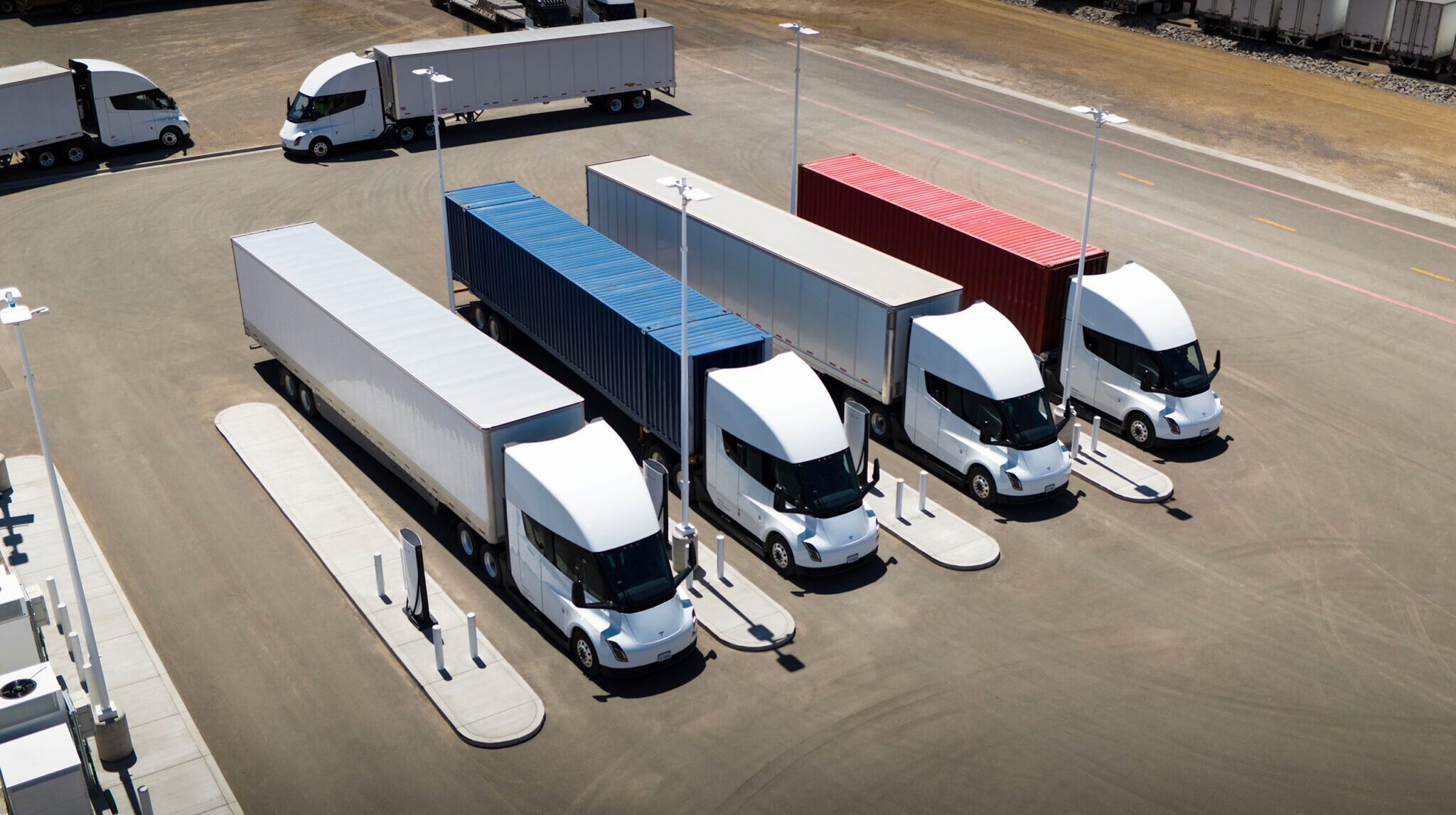
Tesla has confirmed it will unveil the technical specifications and launch details for the Semi’s European market entry at September’s IAA Transportation trade exhibition, according to an official company post on X. The launch, which comes after years of uncertainty about the prospects of a European launch, will see a unit displayed at the trade fair running between 15 and 20 September; details could emerge as early as a press event on 14 September.
The announcement marks a notable reversal from a previous Tesla appearance at IAA. When a Semi unit shipped from the US attracted attention at the 2022 show, the automaker offered almost no information about the model’s European future. This time, it has formally confirmed its participation and taken the rare and relatively unusual step of issuing a press release, promising further details on both the launch and the specific European market model variants.
The US version of the Semi, whose final production specifications Tesla confirmed in February, comes in two trims: a Standard Range model offering 325 miles (523 km) on a 548 kWh battery at a gross weight of 37.2 tonnes, and a Long Range version reaching 500 miles (800 km) at the same gross weight on an 822 kWh battery. Both use three electric motors delivering up to 800 kW combined and support 1.2 megawatt charging through Tesla’s V4 technology, restoring most of the Long Range’s charge in around 30 minutes.
Tesla prices the two US trims at US$260,000 and US$290,000 respectively, positioning the Semi as the Class 8 battery-electric truck with the best range and most affordable price tag in the US. European prices remain unconfirmed but are likely to undercut leading domestic players, including Mercedes-Benz Trucks’ eActros series.
Semi manufacturing remains at an early ramp, although volume production did kick off in April 2026. The truck is currently built exclusively at a purpose-built factory beside Gigafactory Nevada, designed for eventual annual capacity of 50,000 trucks but still scaling toward that figure gradually. Pre-production work began in October 2022 and included cutting roughly 1,000 lb from the vehicle’s design. Tesla went on a hiring spree at the facility in early 2025 ahead of mass production.
A small number of early, largely hand-built units are already running in the US, including 36 confirmed in PepsiCo’s California fleet. US customers are quickly accumulating, with Tesla’s Semi becoming an anchor brand for both Uber and Einride’s fleet-as-a-service platforms.
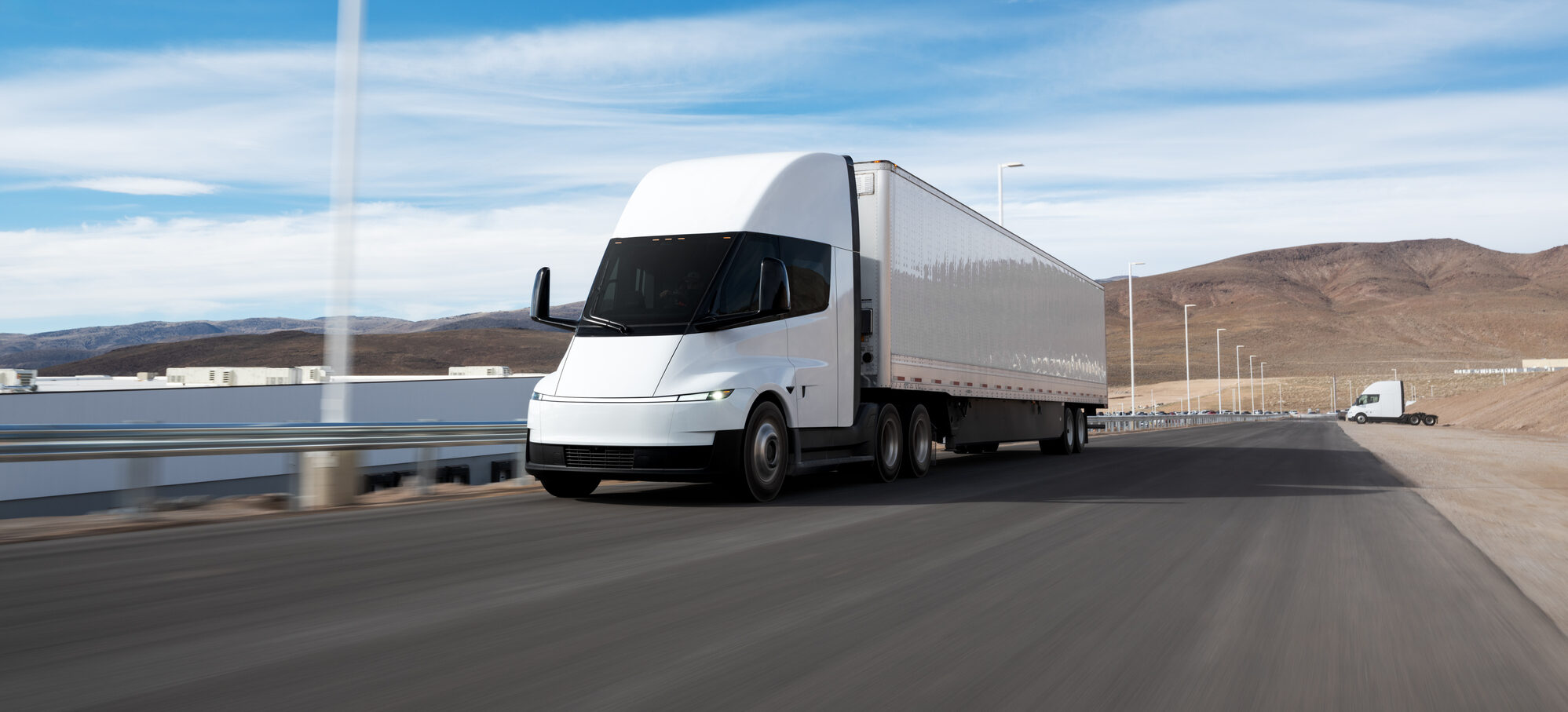
As for European production, a likely necessity given the scales Tesla is envisioning, it will almost certainly take place at Giga Berlin. Chief Executive Elon Musk has signalled as much in recent months, telling staff at the Grünheide plant that he expected the Semi to reach Europe within a year. Production at Gigafactory Berlin-Brandenburg was floated, though Tesla did not confirm that plan when asked directly.
Producing in Germany would let Tesla use spare capacity at a plant still running below its planned output, build a variant already adapted to European standards, and avoid the tariffs and shipping costs of hauling heavy trucks across the Atlantic. Still, the first delivery batches may still rely on Nevada-built imports while local production is ramped up.
In terms of those standards: the Semi’s design turns out to fit European rules more comfortably than its long-nose, US styling might suggest. European trucking has traditionally favoured flat-nosed cab-over designs because legal length limits apply to an entire combined vehicle, penalising conventional cabs that eat into cargo space. However, a recent EU rule change now permits for longer, sloped cabs specifically when the extra length improves aerodynamics, safety or zero-emission technology.
Since the Semi’s extended nose serves purely aerodynamic purposes rather than housing an internal combustion engine, it qualifies under that exemption without requiring a redesign. Tesla made only minor adjustments—lighting, mirrors and bumper specifications—to secure European homologation.
It should be noted that the market Tesla is entering is small, and European demand for battery-electric trucks substantially lags China. Global sales of zero-emission heavy-duty vehicles rose 86% in 2025 to 520,500 units, but 88% of those were concentrated in China; only 4.6% were in the EU. Germany alone sold just 7,430 zero-emission trucks and buses in 2025, and it is in this small market that Tesla will be competing alongside incumbents like MAN, Daimler, and Scania.
The only realistic bet for Tesla is to offer a product so compelling on both price and range that it substantially expands the addressable market for zero-emission trucks. Still, a binding constraint may emerge in the form of charging infrastructure: EU rules do not require member states to cover even half of the continent’s core freight network with charge points until the end of 2027. A planned German network of 195 stations announced in 2025 remains one of relatively few dedicated commercial-charging projects currently under way.
AP by OMG
Asian-Promotions.com |
Buy More, Pay Less | Anywhere in Asia
Shop Smarter on AP Today | FREE Product Samples, Latest
Discounts, Deals, Coupon Codes & Promotions | Direct Brand Updates every
second | Every Shopper’s Dream!
Asian-Promotions.com or AP lets you buy more and pay less
anywhere in Asia. Shop Smarter on AP Today. Sign-up for FREE Product Samples,
Latest Discounts, Deals, Coupon Codes & Promotions. With Direct Brand
Updates every second, AP is Every Shopper’s Dream come true! Stretch your
dollar now with AP. Start saving today!
Originally posted on: https://www.automotiveworld.com/news/502804/