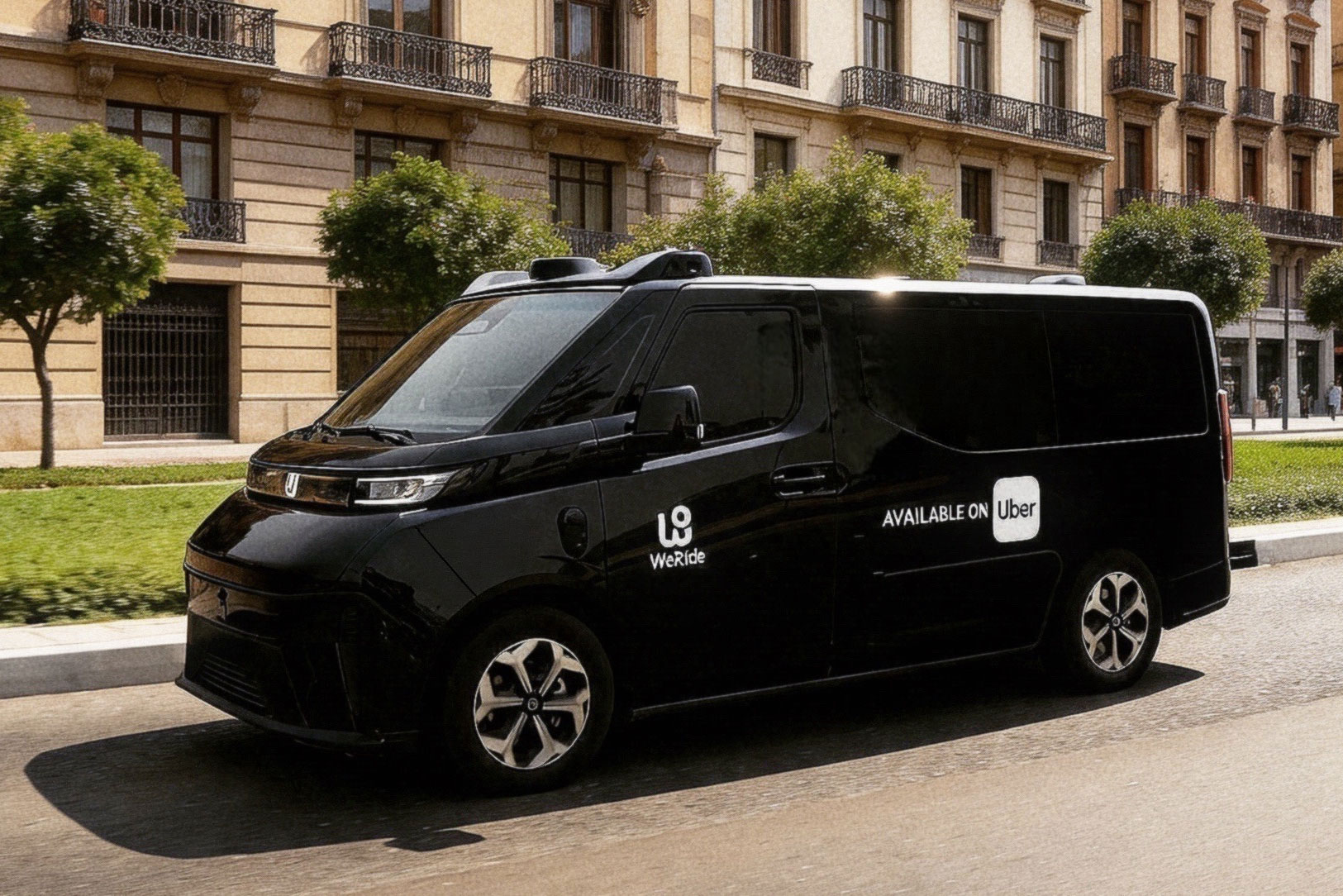
Uber pledges $10bn to robotaxis, Waymo still “important”
On 5 August, during its Q2 earnings, Uber announced a commitment of more than US$10bn to its robotaxi aggregator strategy over the next few years, and it took pains to insist Waymo remains a “very, very important partner” despite the two companies actively winding down their partnership. Shares fell 4.8% anyway, after Uber’s third-quarter profit forecast came in below Wall Street expectations.
During the call, Chief Executive Dara Khosrowshahi framed the spending as a sign of strength rather than pressure and claimed Uber’s record US$2.8bn in quarterly free cash flow (and US$10.1bn over the trailing 12 months) gives it room to fund autonomous vehicle partners as they scale. It is moving quickly to ramp these partnerships into commercial services, of which seven are already live in various global cities. Khosrowshahi reiterated the company’s plans to reach as many as 15 by year-end, and 28 by 2028.
The company’s best-known and arguably most prestigious partnership is—was—with Waymo, but tensions between the two companies have been readily apparent for months. Waymo quietly wound down its Phoenix robotaxi and food delivery arrangements with Uber in May 2026 and notified the company of plans to launch its own app in Austin and Atlanta from January 2028. This would effectively end exclusivity in both cities once the current contract lapses in May of that year.
Uber has since confirmed that Waymo would likely depart from its platform when the contract lapses. Khosrowshahi appeared to acknowledge the tension while emphasising that there are no shortage of Waymo substitutes now out there: “we’re absolutely seeing a plethora of newer players in the AV ecosystem,” emphasising that Uber wants to avoid depending on any single partner.
The rift primarily traces back to competing philosophies between the companies about distribution. Waymo has built direct customer relationships in every city it has expanded into on its own terms, while Uber’s entire robotaxi strategy assumes that operators will keep needing its ride-hailing network to reach riders. Waymo’s departure tests that assumption directly, and Uber’s response has been to spread its bets across dozens of partners rather than lean harder on the one that’s leaving.
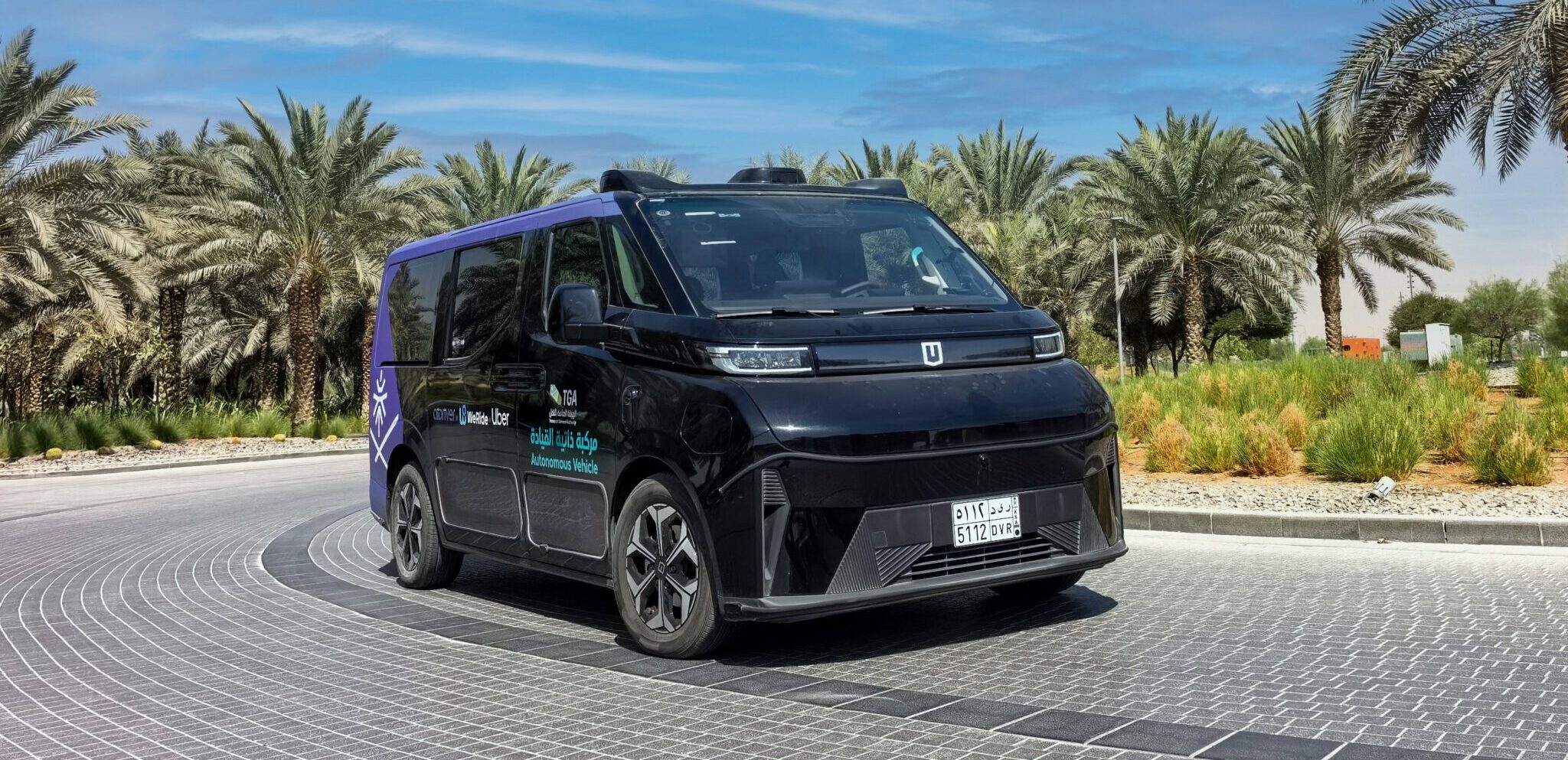
WeRide and Uber launched Riyadh commercial robotaxi services in October 2025
The breadth of that spread is undeniable and encompasses virtually every noteworthy self-driving player operating worldwide. Uber has struck deals or made direct investments in more than 30 companies over the past two years, spanning passenger robotaxis, sidewalk delivery robots and long-haul freight. Its biggest financial commitments—for better or worse—have gone to Lucid, of which Uber now holds an 11% stake after investing $500m and ordering at least 35,000 robotaxi-ready vehicles equipped with Nuro’s self-driving system. Another major partner is Rivian, with whom it struck a deal worth up to US$1.25bn covering thousands of R2-based robotaxis for a 25-city rollout by 2031.
Geographically, the partnerships are split cleanly by region. In the Middle East, Uber runs Chinese-made robotaxis supplied by WeRide and Baidu across Abu Dhabi, Dubai and Riyadh, with plans to add at least 1,200 vehicles there by 2027. In Europe, it’s backing Wayve in London and Munich, Momenta in Munich, and a three-way arrangement with Pony.ai and Croatian operator Verne in Zagreb. In the US, its roster includes Avride in Dallas, Motional in Las Vegas, May Mobility in Arlington, and Zoox arriving in Las Vegas this year ahead of Los Angeles in 2027.
Freight and delivery make up a smaller but genuine second track. Uber Freight has run self-driving truck pilots with Aurora between Dallas and Houston since 2024, alongside a data-focused partnership with Daimler-owned Torc Robotics and a longer-running tie-up with Volvo Autonomous Solutions. On the sidewalk-robot side, Uber Eats works with Avride, Coco, Cartken, Serve Robotics and Starship Technologies across a smattering of US and European cities, none of it especially large on its own, but collectively giving Uber exposure to autonomy well beyond the robotaxi segment that generally garners the most attention.
Khosrowshahi has also tried to frame Uber’s approach as more responsible than the wider AI industry’s, remarking that robotaxi deployment should be “slower” and “more deliberate” to avoid the kind of public backlash data-centre buildouts have triggered elsewhere. That argument for cautious, well-regulated rollout co-exists alongside Uber’s active opposition to a Washington DC bill that would loosen robotaxi rules—a bill Waymo strongly supports—due to concerns that wider robotaxi access would displace the human drivers on which its own ride-hailing business still depends.
Uber’s more than US$10bn commitment ultimately reads like hedging. For Uber, the only way to retain its ride-hailing leadership in a fully-autonomous future is to ensure that virtually every robotaxi player depends on its platform for distribution. Waymo’s departure appears like an attempt to deny Uber its presumed throne, and none of the other companies Uber is working with can compete with Waymo on fleet size, mindshare or positive reputation.
AP by OMG
Asian-Promotions.com |
Buy More, Pay Less | Anywhere in Asia
Shop Smarter on AP Today | FREE Product Samples, Latest
Discounts, Deals, Coupon Codes & Promotions | Direct Brand Updates every
second | Every Shopper’s Dream!
Asian-Promotions.com or AP lets you buy more and pay less
anywhere in Asia. Shop Smarter on AP Today. Sign-up for FREE Product Samples,
Latest Discounts, Deals, Coupon Codes & Promotions. With Direct Brand
Updates every second, AP is Every Shopper’s Dream come true! Stretch your
dollar now with AP. Start saving today!
Originally posted on: https://www.automotiveworld.com/news/uber-pledges-10bn-to-robotaxis-waymo-still-important/