
VW’s Iron Dome plans stall over objections from Qatar
Qatar’s sovereign wealth fund is complicating Volkswagen’s plans to repurpose its Osnabrück plant for Israel’s Iron Dome component manufacturing, claims a 17 June report by Reuters. The Qatar Investment Authority, which holds 17% of Volkswagen voting rights and two seats on its supervisory board, has raised objections to the proposed deal with Israeli state-owned Rafael Advanced Defence Systems—placing its position as the automaker’s third-largest investor in direct tension with the plant’s most credible, albeit controversial, rescue plan.
The objection is a reflection of Qatar’s geopolitical status more so rather than any commercial disagreement with the industrial logic. At the time of writing, Doha has no formal diplomatic relations with Israel and instead served as a mediator between Israel and Hamas, which maintains a political office in the city. Facilitating a deal that routes Israeli defence manufacturing through a company it partly owns would place Qatar in a directly contradictory position.
Hence, it is awkward for the sovereign wealth fund to offer tacit or direct support for any Iron Dome-related defence project. There is also substantial domestic public pressure within Qatar in support of Palestine, and the country has long made any normalisation with Israel conditional on a credible pathway to Palestinian statehood.
Meanwhile, the stakes for Osnabrück and its workers are considerable. Rafael signed a letter of intent to acquire the site in late April 2026, with the intention of manufacturing heavy transport trucks, missile launchers and power generators for the Iron Dome system—components rather than munitions, a distinction Volkswagen has repeatedly emphasised given the city’s pacifist history.
The plant employs 2,300 people; T-Roc production ends next year, and no regular passenger vehicle alternative has materialised despite months of effort. Two sources told Reuters that a joint venture between Volkswagen and Rafael, with Lower Saxony as a partner, is one mechanism being explored to navigate the impasse, though no solution has been agreed. Lower Saxony holds a major stake in Volkswagen. By law, it holds 11.8% to 12.7% of the total share capital but is granted exactly 20% of the voting rights.
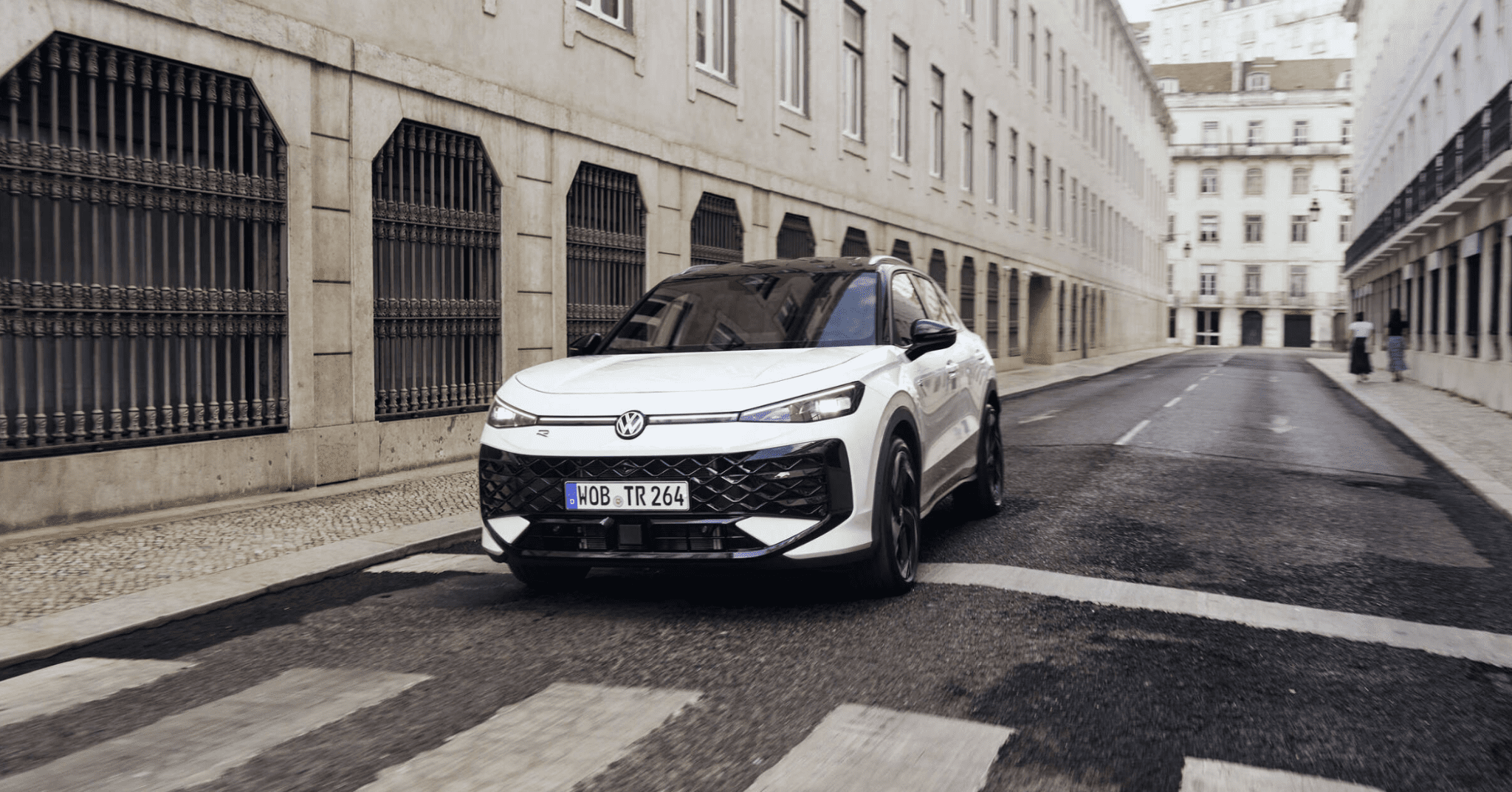
When T-Roc production ends in 2027, Osnabrück will have no passenger vehicle contracts
The Qatar complication exposes how tangled the defence pivot could prove for European automakers: VW needs the deal to avoid a closure that would trigger significant political and union fallout in Lower Saxony, Rafael needs a manufacturing partner, and the German government is actively supporting the proposal. But this is not the 1940s; trade and investment networks now span a tangled global network. Any commercially viable plan will still require consensus across constituencies with fundamentally different geopolitical priorities.
The Osnabrück negotiations sit within a broader shift that has now extended well beyond Volkswagen. Western automakers have, throughout June, embarked on a wave of defence announcements: Daimler Truck launched a unified defence brand with a €1bn (US$1.15bn) revenue target by 2028, Scania unveiled a modular protected cab at Eurosatory, Renault revealed a militarised prototype with Thales, and Mercedes-Benz signed an MoU with counter-drone AI startup Tytan Technologies. Across the Atlantic, GM has tied up with Lockheed Martin for munitions component production, and Ford is in active talks with both the US government and several European defence ministries.
Two simultaneous crises are driving the defence pivot. On the one hand, Western defence players—Lockheed, Boeing, KNDS—are operating near capacity and cannot surge output fast enough to meet demand from the Ukraine and Iran conflicts and NATO-wide rearmament. On the other, automakers have idle factories, diminished margins, trained workforces and high-volume supply chains capable of producing more or less the same common-use components that the defence industrial base needs.
Most of Western automotive, give or take a couple of commercial vehicle manufacturers, have spent the previous decade distancing themselves from defence under ESG pressure. The reversal, and the urgency to reinforce their margins, has happened with a speed that has outpaced the governance frameworks they put in place to manage it.
Still, the limits of the pivot are real. High-end munitions require specialist tolerances, security clearances and procurement culture that commercial vehicle manufacturing does not supply. The Wall Street Journal noted explicitly that overlap between automotive supply chains and the weapons components in shortest supply is actually quite limited.
But for Volkswagen, those limits may be a secondary concern: the immediate problem is whether a plant with 2,300 workers, to whom the company has promised no closures in Germany whatsoever, and no vehicle programme can survive 2027. The only commercially viable deal on the table is being held up by a shareholder sitting some 4,500 kilometres away.
AP by OMG
Asian-Promotions.com |
Buy More, Pay Less | Anywhere in Asia
Shop Smarter on AP Today | FREE Product Samples, Latest
Discounts, Deals, Coupon Codes & Promotions | Direct Brand Updates every
second | Every Shopper’s Dream!
Asian-Promotions.com or AP lets you buy more and pay less
anywhere in Asia. Shop Smarter on AP Today. Sign-up for FREE Product Samples,
Latest Discounts, Deals, Coupon Codes & Promotions. With Direct Brand
Updates every second, AP is Every Shopper’s Dream come true! Stretch your
dollar now with AP. Start saving today!
Originally posted on: https://www.automotiveworld.com/news/vws-iron-dome-plans-stall-over-objections-from-qatar/