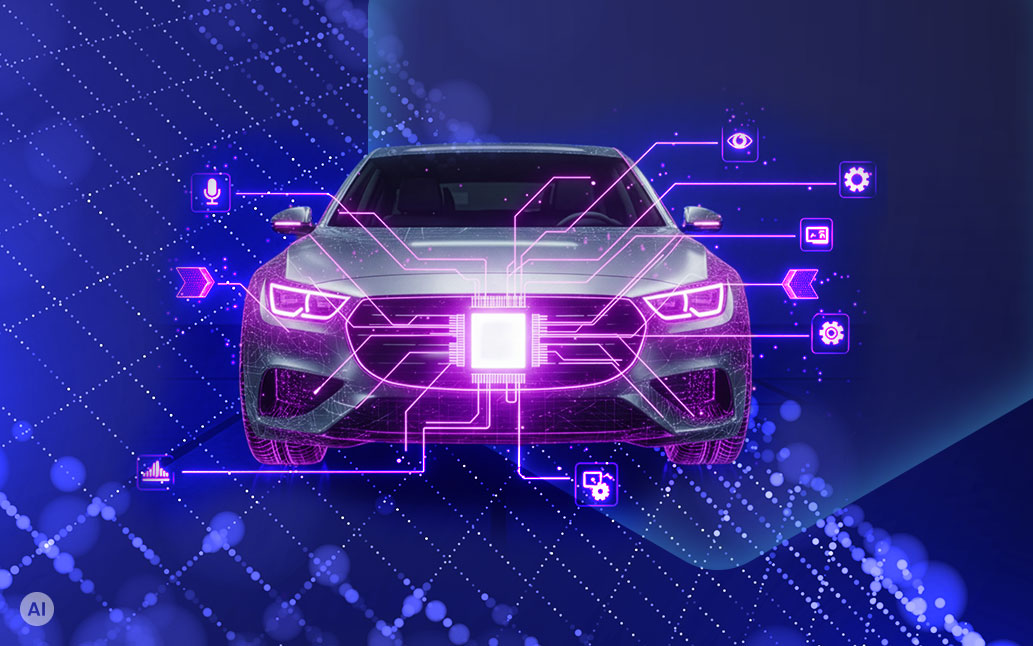
FEV and Microsoft bring offline AI to vehicle cabins
FEV has partnered with Microsoft to embed generative AI capabilities in vehicles using small language models running on Nvidia hardware, enabling voice, text and gesture interaction without a permanent internet connection. The collaboration centres on Microsoft’s Phi-4-mini-instruct model on Nvidia DRIVE AGX compute, allowing vehicle functions such as dashboard settings to be configured locally by voice command.
The approach favours embedded small language models (SLMs) over cloud-dependent large language models (LLMs), keeping central functions available during limited or no connectivity while reducing backend infrastructure costs for OEMs scaling software-defined vehicle functions. SLMs also act as local backup intelligence for cloud-based LLMs when connectivity is disrupted.
FEV has produced a dashboard configurator demonstrating the technology, currently being tested in demo vehicles, with near-series applications expected later this year. Application areas under investigation include automated driving at Society of Automotive Engineers levels 3 to 5, driver and passenger monitoring, and personalised human-machine interface configuration.
In a statement, Thomas Hülshorst, Group Vice-President, Intelligent Mobility and Software at FEV, said:
“Our collaboration with Microsoft and Nvidia showcases how small, efficient language models can transform in-vehicle experiences, delivering powerful functionality without the overhead of larger systems.”
Boris Scholl, Vice-President of Engineering at Microsoft, added:
“By combining advanced AI frameworks with domain- and task-specific optimizations, FEV and Microsoft are shaping the future of intelligent, voice-driven interfaces that meet the high standards of automotive deployment.”
Why this matters:
- Offline capability is becoming a competitive differentiator in SDV architecture.The shift toward small language models running locally rather than relying on cloud LLMs addresses a structural vulnerability that OEMs have been slow to acknowledge—a vehicle whose AI functions degrade without connectivity is a harder sell in markets with patchy infrastructure, and a liability in safety-adjacent applications where latency matters.
- Backend cost reduction may prove as compelling as the user-facing benefits.Scaling cloud LLM inference across millions of connected vehicles is expensive; embedded SLMs that handle routine interactions locally while reserving cloud calls for complex queries changes the unit economics of SDV deployment in ways that could accelerate adoption among cost-conscious OEMs more than any capability argument alone.
AP by OMG
Asian-Promotions.com |
Buy More, Pay Less | Anywhere in Asia
Shop Smarter on AP Today | FREE Product Samples, Latest
Discounts, Deals, Coupon Codes & Promotions | Direct Brand Updates every
second | Every Shopper’s Dream!
Asian-Promotions.com or AP lets you buy more and pay less
anywhere in Asia. Shop Smarter on AP Today. Sign-up for FREE Product Samples,
Latest Discounts, Deals, Coupon Codes & Promotions. With Direct Brand
Updates every second, AP is Every Shopper’s Dream come true! Stretch your
dollar now with AP. Start saving today!
Originally posted on: https://www.automotiveworld.com/news/fev-and-microsoft-bring-offline-ai-to-vehicle-cabins/