Hyundai union strikes over pay and automation fears
Hyundai’s South Korean union staged its first full, eight-hour strike in a decade on 21 August, shutting down all production across the automaker’s Ulsan, Jeonju and Asan plants after wage talks stalled. The union is pressing two distinct sets of demands simultaneously: higher pay and bonuses on one side, and binding job protections against AI and automation on the other—a combination that has turned this year’s negotiation into something considerably more structurally novel than a routine wage dispute.
Roughly 40,000 union members joined the walkout, with both the 6:45am morning shift and 3:30pm afternoon shift staying off the job for a combined 16 hours of idled production. Around 1,200 to 1,300 of these members attended a rally outside Hyundai’s Seoul headquarters, joined by workers from subsidiary brand Kia, as well as local parts suppliers, bringing total attendance to roughly 3,000. Union leader Lee Jong-cheol told the crowd: “The key figures who made Hyundai and Kia the world’s strongest company for 35 or 40 years are now being pushed into contract positions.”
On pay, the union is seeking a base salary increase of KRW 149,600 (US$96.80) a month per worker, a distributed performance bonus equal to 30% of last year’s net profit, an increase in existing bonuses from 750% to 800% of monthly base salary, and an extension of the retirement age from 60 to 65. It argues that fixed wages currently make up only 54.8% of members’ total pay, leaving them dependent on overtime and holiday work. One reference point cited by the union is Samsung’s recent agreement to distribute 10.5% of operating profit to its semiconductor employees as a benchmark for its own bonus demand.
Hyundai has pushed back on the financial scale of the demands, warning that its operating profit fell 19.5% in 2025 to KRW11.46tr, leaving it less capable of absorbing a sudden increase in operating costs. The union has countered by citing KRW101.3tr in retained earnings as evidence the company can absorb higher bonuses and an extended retirement age. It does not frame the matter in terms of profitability, but in terms of how existing profits are shared.
The matter of automation goes substantially beyond compensation and into direct worker control over how Hyundai’s robotics ambitions are rolled on on factory floors. Rather than simply negotiating pay in light of AI and robotics, the union is seeking binding consent authority over any deployment of AI or humanoid robots on assembly lines. It marks a significant departure from previous disputes that were centred on wages or how single-task robotic arms were deployed.
Factory workers are not alone in being exposed to displacement by these technologies: officials have said that the threat extends well beyond production roles into research and engineering positions too. “Even if AI is introduced, we are prepared to fight it, and prepared to win,” said Kim Byung-chul, Vice President of the Korean Metal Workers’ Union, to Reuters. “We are concerned about the future generation.”
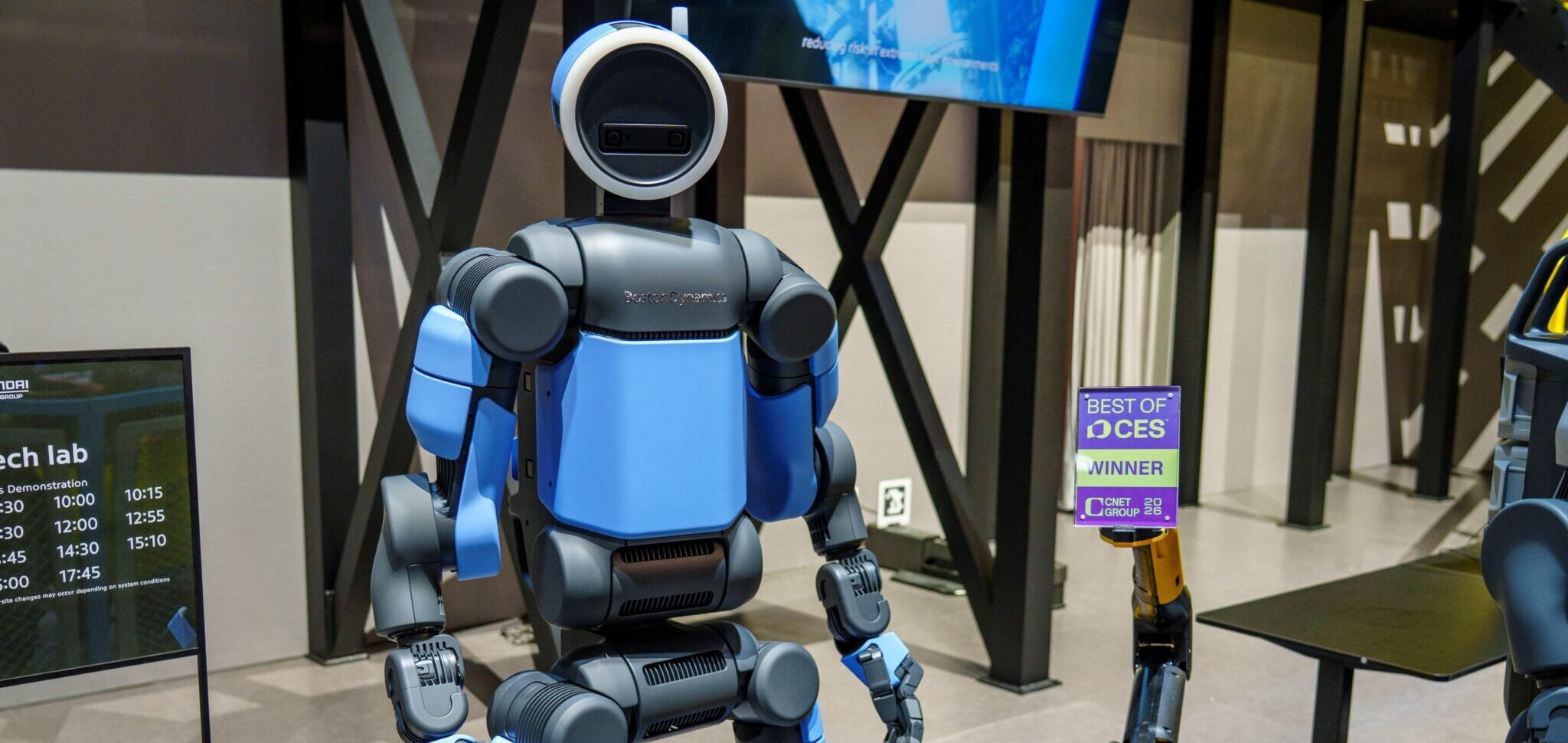
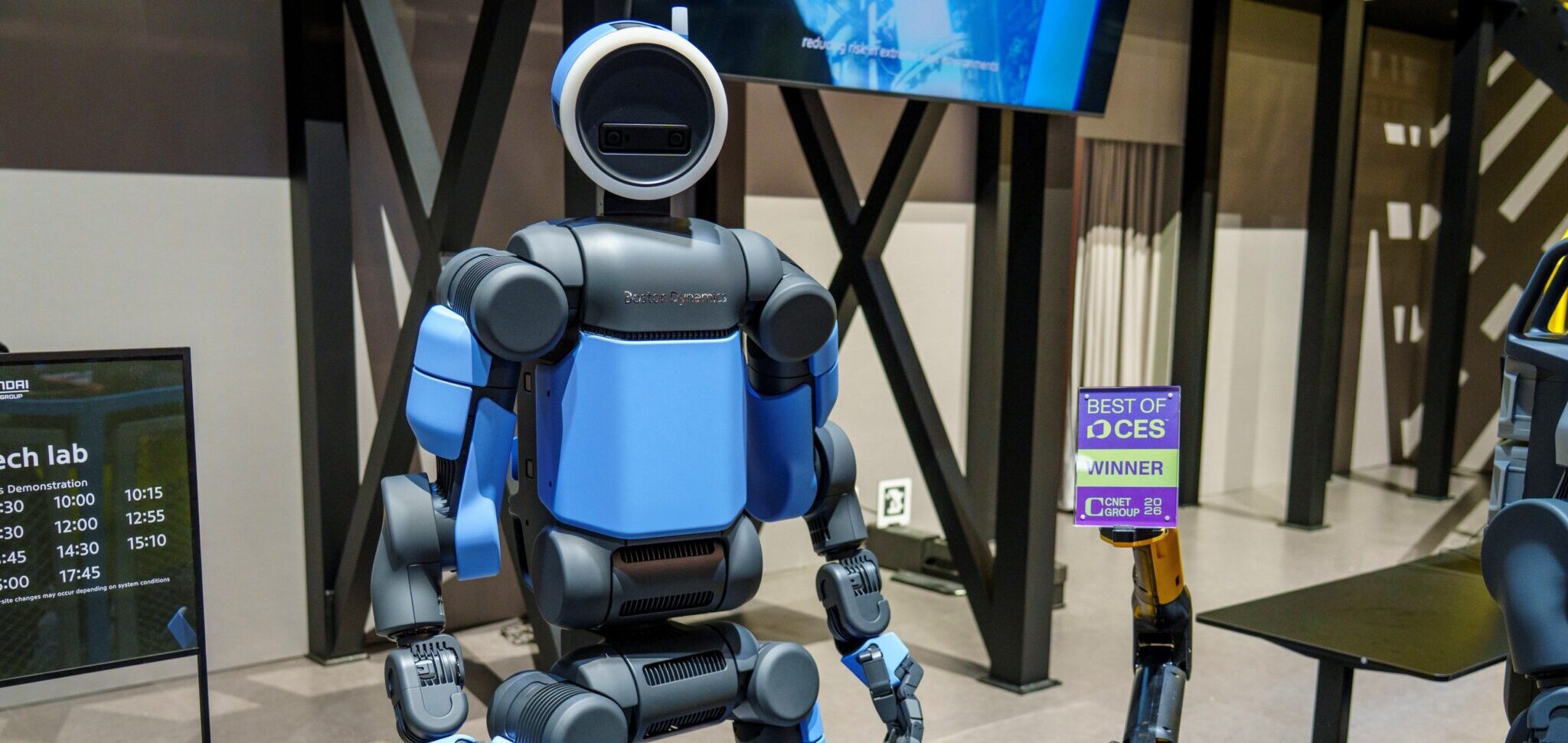
Even more so than Tesla or Xpeng, Hyundai is arguably the automaker most singularly focused on deploying humanoid robots in its factories. It fully acquired US robotics firm Boston Dynamics in July 2026, and plans to begin putting the company’s Atlas robot to use in its Georgia plant as early as 2028. Similar concerns have not yet been raised by Georgia plant workers, which is not unionised despite efforts by the UAW.
The Atlas robot is capable of multiple things a human worker simply is not: it offers 56 degrees of freedom and a continuously rotating spine, lifts up to 50kg at peak capacity against roughly 15 to 20kg before a human worker requires crane assistance, and can run at close to 99% uptime with a battery swap under three minutes. All of this is achieved without the repetitive-strain risk that represents a genuine ergonomic cost for human labour; software updates also allow the robots to be “trained” instantaneously and at minimal cost, unlike human labour.
Human workers retain a clear advantage in one area Atlas has not yet closed: fine tactile assembly work such as routing wiring harnesses, fitting delicate interior trim clips and manipulating flexible rubber seals, tasks that still depend on dexterity and tactile feedback humanoid grippers have not fully replicated.
Binding an automation veto into a labour contract, rather than simply negotiating compensation for job losses after the fact, would give Hyundai’s union direct influence over the pace of its own robotics rollout. This dispute is likely to set a template other automakers watch closely as humanoid robots move from pilot programmes toward potential deployment on production lines.
AP by OMG
Asian-Promotions.com |
Buy More, Pay Less | Anywhere in Asia
Shop Smarter on AP Today | FREE Product Samples, Latest
Discounts, Deals, Coupon Codes & Promotions | Direct Brand Updates every
second | Every Shopper’s Dream!
Asian-Promotions.com or AP lets you buy more and pay less
anywhere in Asia. Shop Smarter on AP Today. Sign-up for FREE Product Samples,
Latest Discounts, Deals, Coupon Codes & Promotions. With Direct Brand
Updates every second, AP is Every Shopper’s Dream come true! Stretch your
dollar now with AP. Start saving today!
Originally posted on: https://www.automotiveworld.com/news/hyundai-union-strikes-over-pay-and-automation-fears/