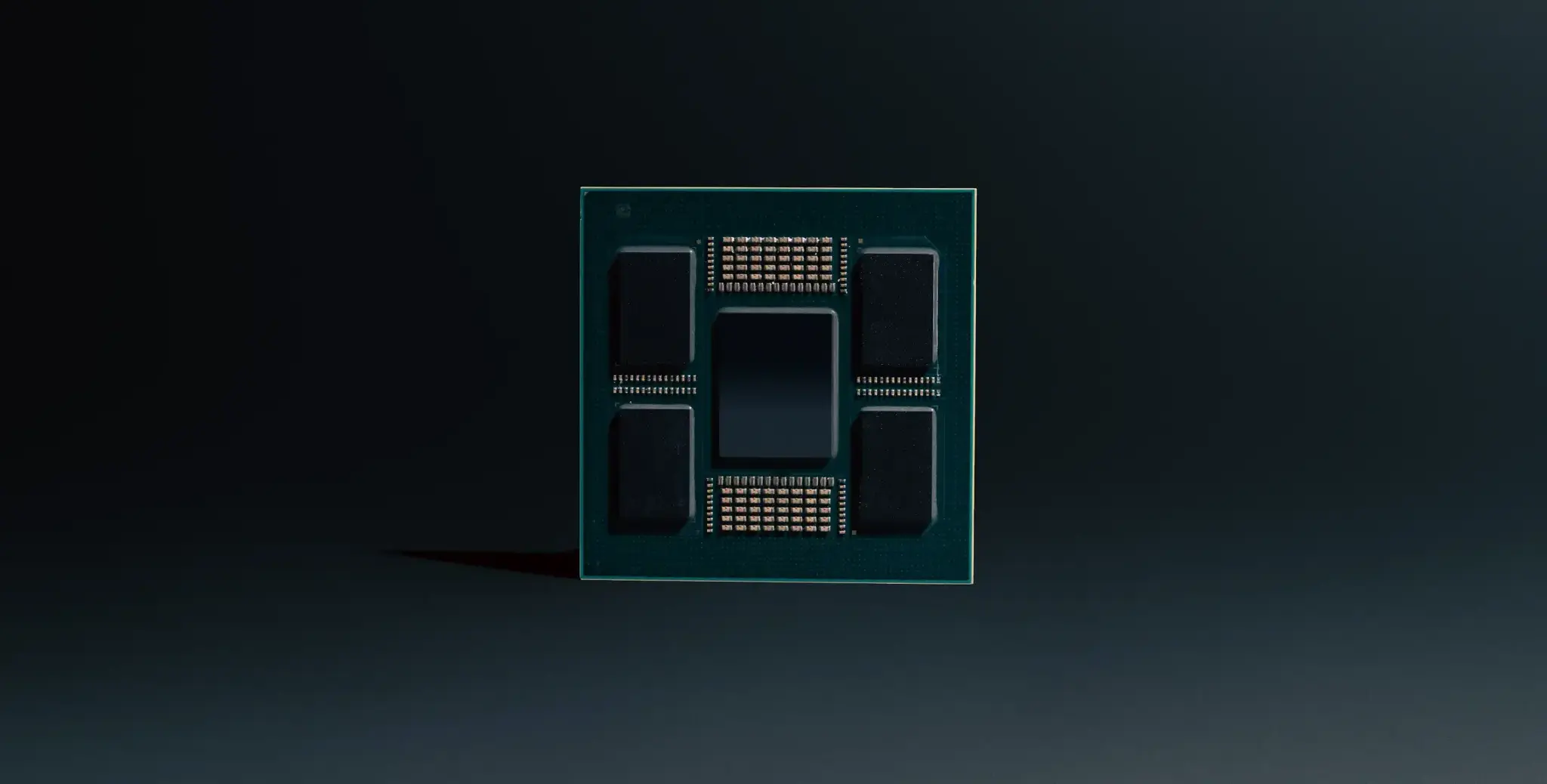
Waymo reveals a custom chip powering its robotaxi fleet
Waymo has disclosed that it has, for the first time, built its own custom computer chip to power its robotaxis, sharing details about the silicon alongside its sensor and software architecture in a 20 August blog post. It is an application-specific integrated chip built using TSMC’s 5nm process technology, and can already be seen in action inside Waymo’s newest robotaxi generation, Ojai.
Waymo said the chip delivers more than 1,000 TOPS, and is dedicated specifically to processing raw sensor data and running machine-learning models at the front end of its system, rather than handling total vehicle compute. That figure sits close to the 1,000 INT8 TOPS Nvidia lists for its DRIVE AGX Thor platform, although the two are not straightforwardly comparable. Waymo has not disclosed the precision behind its own number, and Thor is a centralised system-on-chip running driving, cockpit and infotainment workloads together. Waymo’s chip only processes sensor data before passing it to the company’s main machine-learning system.
The chip was developed alongside Waymo’s proprietary sensors and software rather than as a standalone hardware project. It can extract information from raw LiDAR, radar and camera streams in real time, including temporal denoising that the company claimed improves low-light perception. It also said that the latest system can comfortably process high-fidelity data from 13 high-resolution cameras simultaneously.
Waymo was careful to frame the chip as additive rather than a break from its existing suppliers, of which there are many. Beyond TSMC, the company listed AMD, Micron, Nvidia, Samsung, SanDisk, Socionext as ongoing collaborators. The custom silicon made alongside TSMC is but one of several components it is developing alongside external hardware rather than in place of it.
The blog describes a compute system built around three principles. The first is responsiveness, with all processing handled onboard within milliseconds; second is ruggedisation, with hardware engineered for constant vibration, shock and extreme temperature swings and integrated directly with the vehicle’s liquid cooling; the last is redundancy, running two independent compute units in parallel so one can seamlessly take over if the other fails, since no human driver is available to do so.
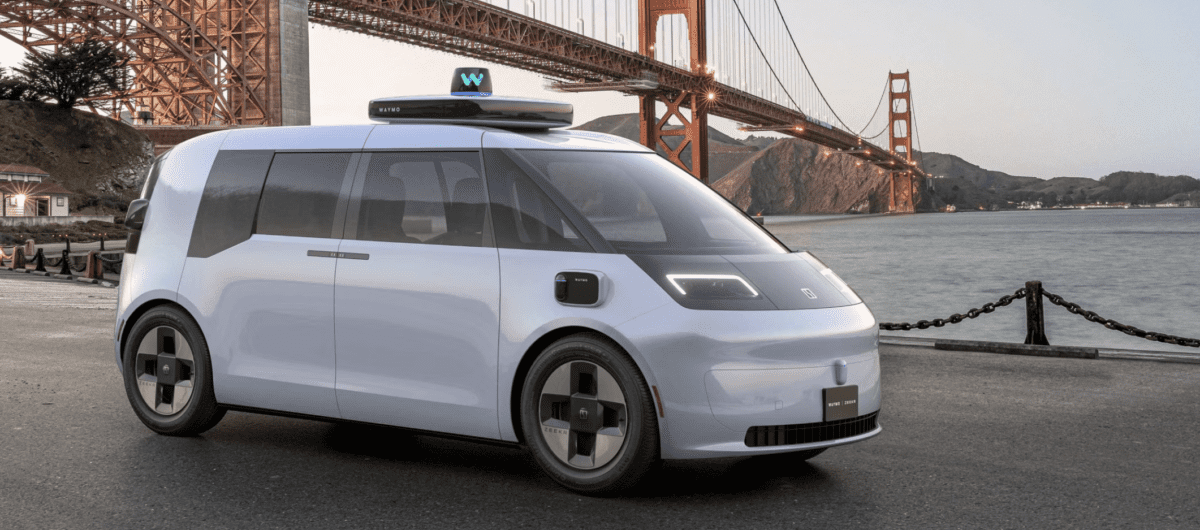
Waymo’s sixth-generation robotaxi, Ojai, is made in China
Waymo said it has scaled raw onboard compute power 20-fold over the past eight years while engineering the system for minimal delay between a sensor capturing an image and the vehicle acting on it. That the system can process so many inputs from different types of sensors, both simultaneously and relatively instantaneously, could also be framed as an implicit response to Tesla’s Elon Musk, who for years has dismissed multi-sensor approaches
The detail also functions as an implicit response to a long-running criticism from Tesla Chief Executive Elon Musk, who has dismissed multi-sensor systems as introducing dangerous “sensor contention” and added costs that would limit the commercial viability of autonomous driving. Musk has singled out LiDAR as a “crutch” and “a fool’s errand”, arguing that reconciling conflicting signals across sensors creates ambiguity rather than safety.
Various Waymo executives, both past and present, have rebutted Musk’s commentary in both polite and less polite terms. The company’s latest account describes exactly the kind of fused, redundant, multi-sensor architecture Musk has criticised, deployed at a scale—more than 500,000 paid rides a week across more than 4,000 vehicles and a dozen US cities—that Tesla’s camera-only approach remains far from matching.
By and large, Waymo has the consensus approach; Ford’s Jim Farley has previously characterised LiDAR as “mission-critical” for his company’s autonomous driving ambitions. Robosense Founder Steven Qiu has called SAE Level 3-4 autonomy more or less impossible with camera sensors only. Perhaps most instructively, a strong majority of US consumers have sided with the multi-sensor approach, voicing concerns about the safety of camera vision online.
The disclosure comes just a day after Waymo launched its latest-generation model, Ojai, to all riders in its three largest markets, Los Angeles, Phoenix and San Francisco. Roughly 300 Ojai vehicles are already in its commercial fleet and further rollouts are planned for Denver, Las Vegas and San Diego later in 2026. The Ojai is, rather controversially, manufactured by Geely brand Zeekr in Ningbo, China, but fitted with Waymo’s sixth-generation Driver system at a facility in Mesa, Arizona.
On the one hand, this represents the same purpose-built approach Waymo says will eventually cut costs while offering roomier, more accessible cabins. On the other, it leaves the company exposed to potential regulatory changes—not strictly unlikely, given the Trump administration’s contentious, often volatile, trade relationship with China.
Cost, not chip performance, remains the constraint Waymo has failed to shed light on, which does leave some of Musk’s remarks unaddressed. Outside estimates put sixth-generation hardware at US$20,000–$25,000 per vehicle, which is down sharply from the US$100,000-$125,000 of the previous generation. However, that improvement may need to fall further still before Waymo’s technically-proven system can support genuinely profitable expansion at the scales it envisions.
AP by OMG
Asian-Promotions.com |
Buy More, Pay Less | Anywhere in Asia
Shop Smarter on AP Today | FREE Product Samples, Latest
Discounts, Deals, Coupon Codes & Promotions | Direct Brand Updates every
second | Every Shopper’s Dream!
Asian-Promotions.com or AP lets you buy more and pay less
anywhere in Asia. Shop Smarter on AP Today. Sign-up for FREE Product Samples,
Latest Discounts, Deals, Coupon Codes & Promotions. With Direct Brand
Updates every second, AP is Every Shopper’s Dream come true! Stretch your
dollar now with AP. Start saving today!
Originally posted on: https://www.automotiveworld.com/news/waymo-reveals-a-custom-chip-powering-its-robotaxi-fleet/