Nikkei: Tesla to expand Japan network 60% amid sales boom
Tesla will expand its Japanese delivery network by 60% in 2026, adding four locations to its current seven, after demand surged well beyond what its existing infrastructure could comfortably handle. The scramble illustrates just how effectively Japan’s reworked subsidy structure and Tesla’s own promotional campaigns have opened up a rare opportunity in the country’s hyper-protectionist vehicle market.
Tesla sold roughly 12,000 vehicles in Japan in just the first half of 2026, comfortably surpassing 2025’s full-year total of slightly more than 10,000. If demand is maintained at this level, the automaker will more than double its local deliveries; by contrast, it took three years for the 2022 full-year total of 5,900 to double. June 2026 alone accounted for roughly 4,000 new car sales, most of them Model Ys.
In comments to Nikkei, Tesla Japan President Richi Hashimoto attributed the spike directly to a three-year free fast-charging campaign for orders and a concentration of deliveries received by the end of June. However, the most important advantage is clearly the country’s adjustments to its national electric vehicle (EV) subsidy, first introduced in January.
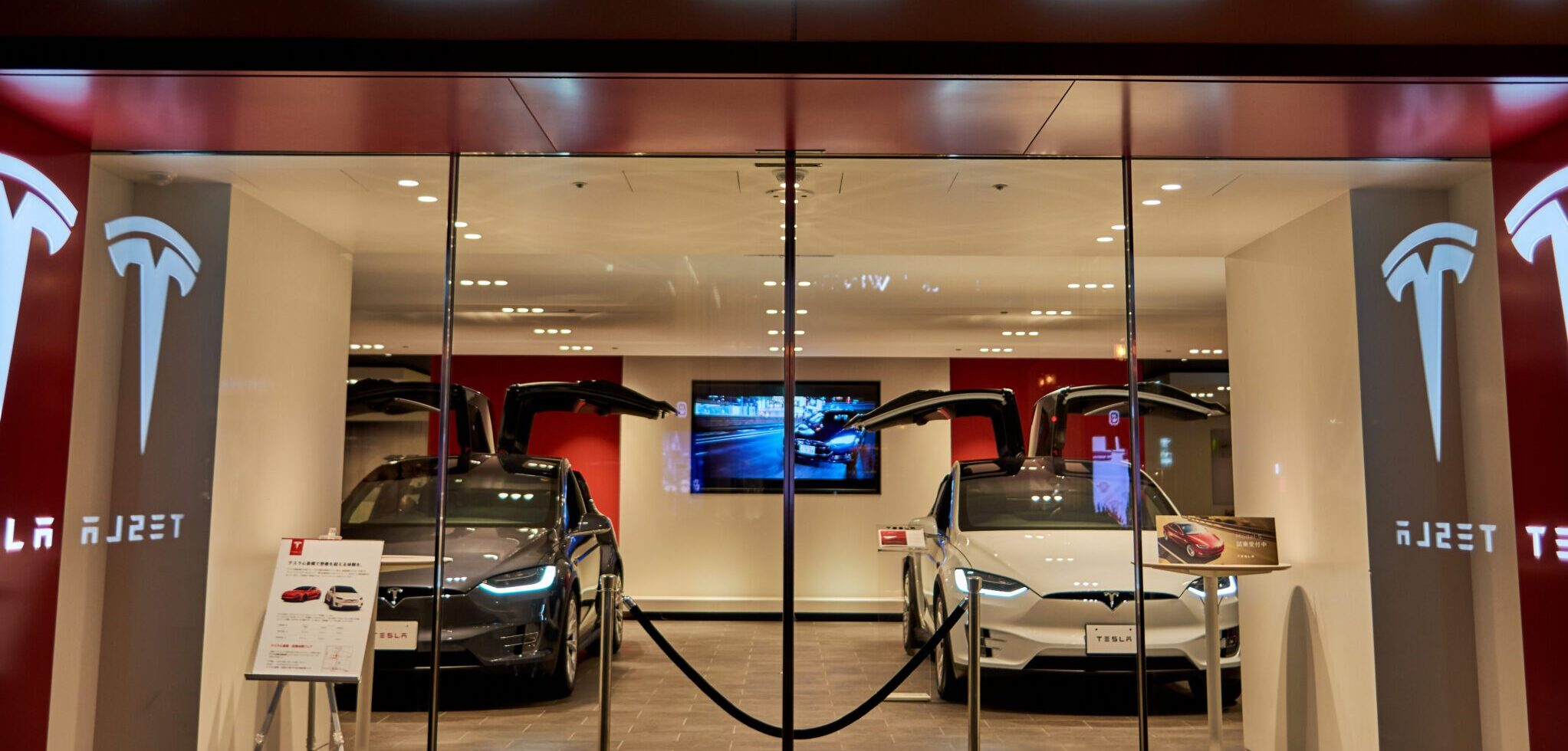
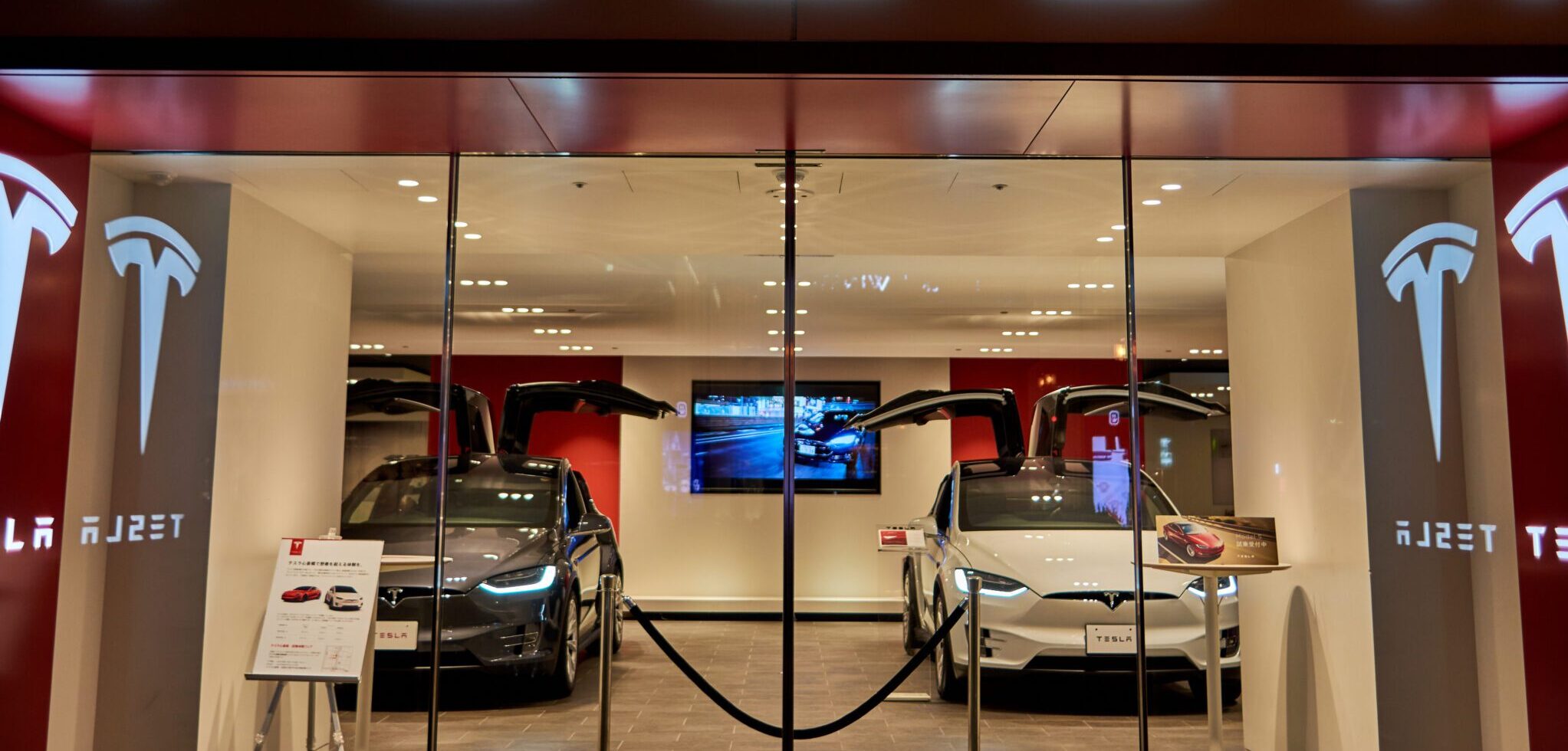
The expansion targets delivery infrastructure specifically rather than showrooms, a distinction Tesla treats carefully. Customers use physical stores only to view its EVs and ask questions, with purchases and contracts handled online and vehicles collected from separate delivery centres or shipped to a home address. Tesla will add locations in Yokohama and Kobe during August, followed by one more in greater Tokyo and another in Nagoya by the year’s end, bringing the network to 11 sites.
Behind the delivery bottleneck sits a doubling of Tesla’s import capacity. The automaker previously unloaded all of its Japan-bound vehicles at Daikoku Wharf in Yokohama, but it has also used Mikawa Port in Aichi prefecture—Japan’s largest vehicle import port—since July. This has lifted the automaker’s total annual capacity to around 48,000 vehicles and given it a second route to distribute cars toward western Japan.
That subsidy advantage traces back to changes that seemingly favour US- and Japan-made cars over their Chinese counterparts. Japan restructured its national EV incentive in April to favour supply-chain security, vehicle-to-everything capability and service coverage rather than raw range or efficiency. This had the effect of keeping Tesla’s Models Y and 3 near the maximum JP¥1.27m (US$7,970) tier while cutting BYD’s allocation, which uses in-house batteries, to a minimum of JP¥150,000. In June, Tokyo separately confirmed it would raise its own municipal subsidy to as much as JP¥1.3m on top of the national scheme.
While this has the effect of disincentivising China-made EV purchases, it should be noted that Tesla and BYD—and indeed Chery, which also intends to enter Japan’s car market—are not competing for the same customer. This is part of why one subsidy framework can simultaneously look generous to Tesla and punitive to BYD. The Japanese government has refused to explain in clear terms why it downgraded the latter’s subsidy eligibility, although BYD has publicly mused that its Chinese origin may be the reason.
Tesla is drawing affluent, tech-oriented buyers away from Japanese brands and their German luxury counterparts like Mercedes-Benz, BMW and Audi. These are essentially a status purchase, operating on strong margins that do not require Toyota-scale volumes to remain profitable. Meanwhile, BYD and Chery are chasing Japan’s kei segment, which accounts for roughly a third of all passenger vehicle sales and is the country’s most loyalty-entrenched category.
Tesla’s absence from that kei segment—a situation unlikely to change—is itself arguably a deliberate advantage rather than an oversight. With no subcompact model competing there, Tesla avoids the intense price competition and potential subsidy penalties that BYD’s Racco and Chery’s as-yet-unrevealed electric keis will contend with as they compete against entrenched rivals like Nissan’s Sakura.
AP by OMG
Asian-Promotions.com |
Buy More, Pay Less | Anywhere in Asia
Shop Smarter on AP Today | FREE Product Samples, Latest
Discounts, Deals, Coupon Codes & Promotions | Direct Brand Updates every
second | Every Shopper’s Dream!
Asian-Promotions.com or AP lets you buy more and pay less
anywhere in Asia. Shop Smarter on AP Today. Sign-up for FREE Product Samples,
Latest Discounts, Deals, Coupon Codes & Promotions. With Direct Brand
Updates every second, AP is Every Shopper’s Dream come true! Stretch your
dollar now with AP. Start saving today!
Originally posted on: https://www.automotiveworld.com/news/nikkei-tesla-to-expand-japan-network-60-amid-sales-boom/