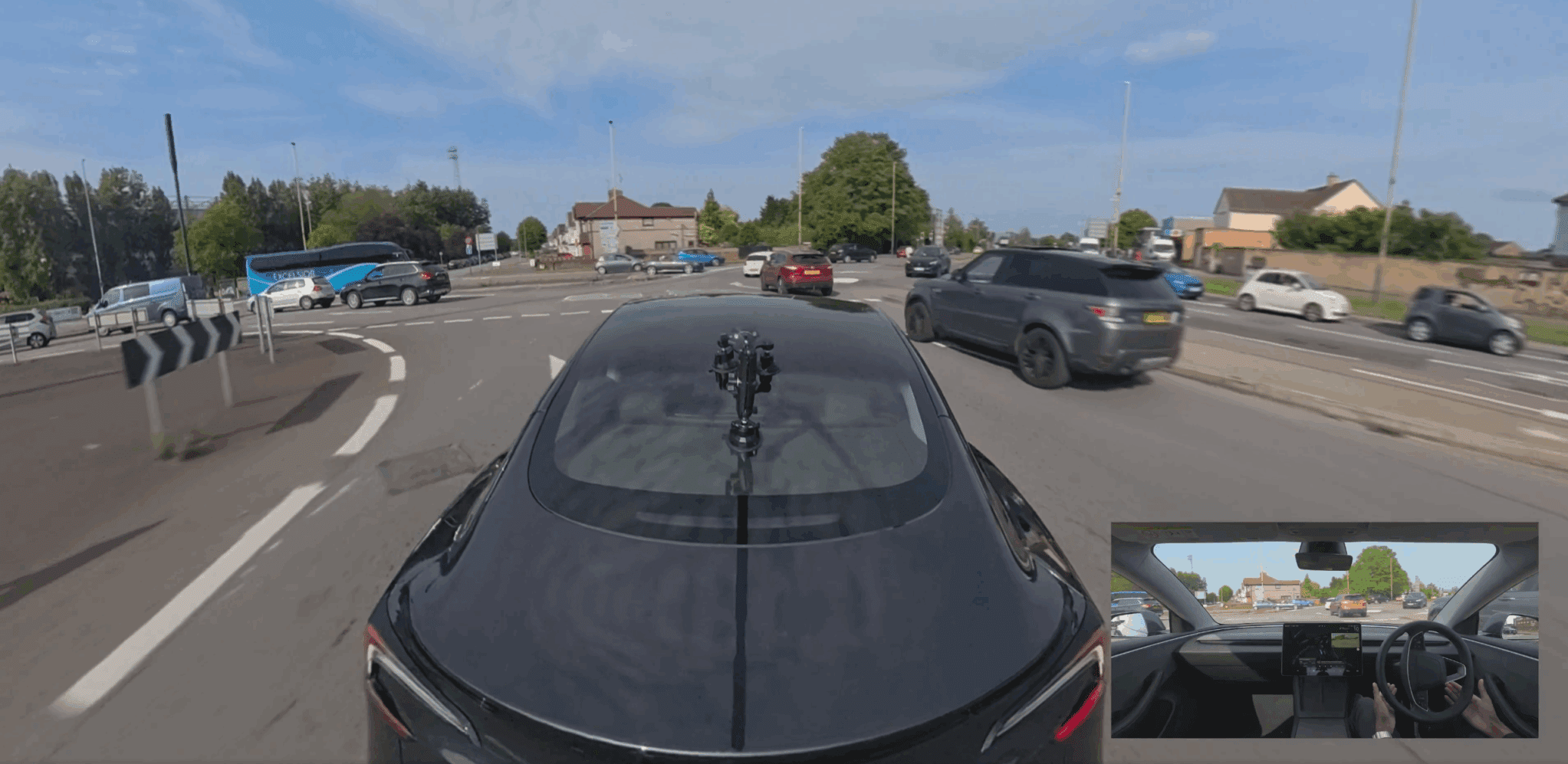
Tesla’s new FSD safety data is nine months out of date
Tesla published European Full Self-Driving (FSD) safety data on 1 September, ahead of a potential EU-wide approval vote expected as soon as 6 October, claiming the driver-assist system is 4.1 times less likely to be involved in a collision than manual driving, as per the 100 million km driven in the five European countries where it is approved. The document Tesla is using to support that claim, however, has every dated measurement window closing in 2025, months before the April-to-August 2026 period the 4.1x figure itself covers.
The dashboard’s own dates make the gaps explicit: mileage distribution covers calendar 2025, automatic emergency braking data runs to 31 October 2025, and lane-change metrics stop in early December 2025. The most recent observation in the entire document falls on 5 December 2025, with nothing recorded for 2026. Three further sections, covering engineering fleet testing, fixed-route testing and speed analysis, indicate no time window at all.
The document’s own internal figures also do not fully reconcile. Summing its European mileage table for 2025 equals 755,922 miles, but a separate section of the same file claims that Tesla has recorded more than 793,000 miles across eight countries. Such a discrepancy could partly be explained by different inclusion rules across the eight countries, but the company did not clarify this in the document and has not offered comment in the time intervening.
Either total is also compared against the 8.91 billion miles logged by manually-driven European Teslas with active safety features over the same period, meaning the FSD sample represents 0.008% the size of the group it is measured against. Whether this is adequate for a thorough assessment of the technology’s capabilities is unclear.
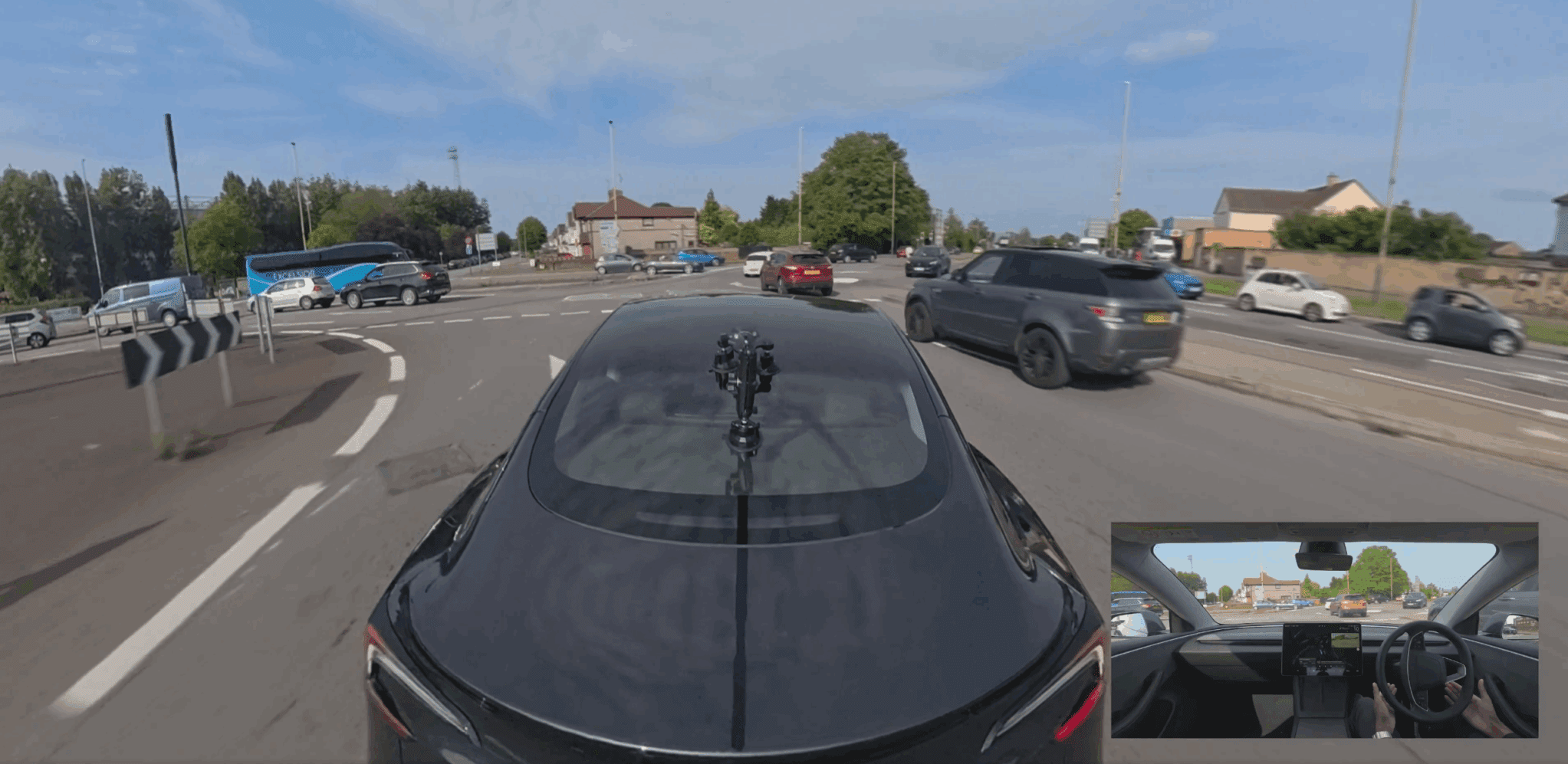
Tesla is relying on outdated data to present its current safety case about FSD
Tesla’s own methodological notes concede real limits, and arguably some deliberate bias, that jars with its public messaging around the technology’s superlative safety capabilities. The dashboard states its fleet-wide comparisons do not control for traffic density, weather, road surface, time of day or scenario complexity, and explicitly describes the results as “observational associations under stratified exposure conditions, not as causal estimates from a randomised experiment.” Tesla’s accompanying public statement that “FSD is already saving lives where it’s approved” is a claim the filing itself, by its own stated limitations, does not support.
The safety multiple Tesla has publicised also deserves scrutiny, since it varies from month to month. The Netherlands-specific figure in June was 3.5 times safer than manual driving; a 28 July release put the figure at 5.2 times across 65 million km; the latest documentation claims a 4.1-fold improvement, marking a 21% decline despite a 54% increase in mileage.
Meanwhile, Automotive World continues to track Tesla’s efforts to shield its full underlying safety case, presented to Dutch regulator RDW, from public view. Tesla argues, as it does with US regulator NHTSA, that it must keep certain pieces of information confidential for the sake of business secrecy. RDW has repeated this argument almost verbatim when pressured to reveal the same information.
Germany, Denmark, Norway and at least three further countries have separately declined to release their own FSD testing data, suggesting the Dutch arrangement functions as a template the rest of the bloc is now following. The five countries that have already recognised the Dutch approval, the Netherlands, Lithuania, Estonia, Denmark and Belgium, together hold only about 8.9% of the EU’s population. Other countries with more voting sway continue to scrutinise the data offered by Tesla.
Publishing a dashboard in which the newest data is nine months old, to support a safety claim about a rollout that only began in April 2026, is not really transparency in the sense regulators and safety researchers have been asking for. It discloses a document but not the current and verifiable performance data on which the impending approval vote depends.
AP by OMG
Asian-Promotions.com |
Buy More, Pay Less | Anywhere in Asia
Shop Smarter on AP Today | FREE Product Samples, Latest
Discounts, Deals, Coupon Codes & Promotions | Direct Brand Updates every
second | Every Shopper’s Dream!
Asian-Promotions.com or AP lets you buy more and pay less
anywhere in Asia. Shop Smarter on AP Today. Sign-up for FREE Product Samples,
Latest Discounts, Deals, Coupon Codes & Promotions. With Direct Brand
Updates every second, AP is Every Shopper’s Dream come true! Stretch your
dollar now with AP. Start saving today!
Originally posted on: https://www.automotiveworld.com/news/teslas-new-fsd-safety-data-is-nine-months-out-of-date/